
Drafting Third Base in 2026 Means Avoiding the Tier Cliff
2026 Fantasy Baseball Position Preview

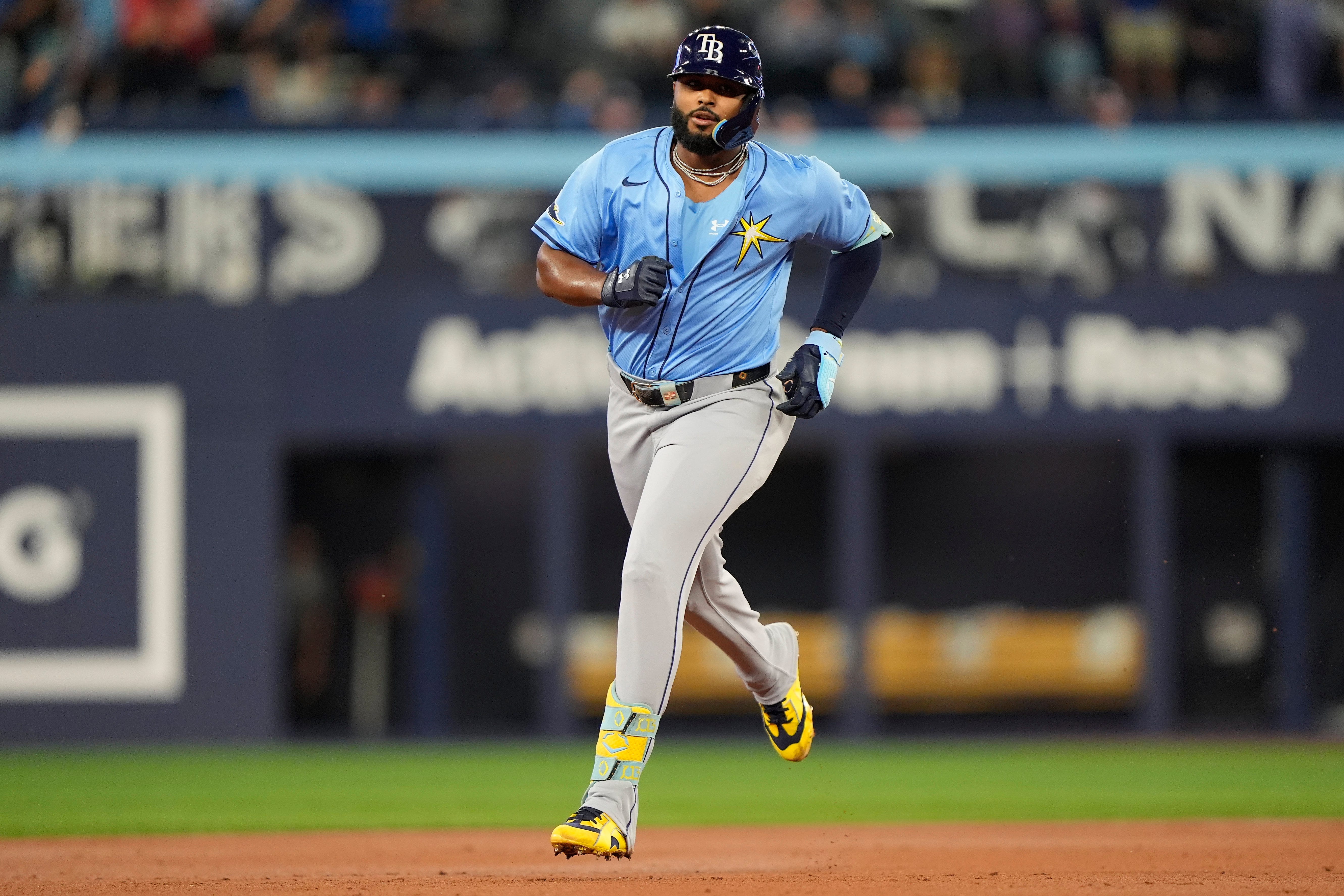
Third base is one of the more shallow positions in fantasy baseball. When you look back at where elite fantasy production came from last season, the hot corner is barely represented.
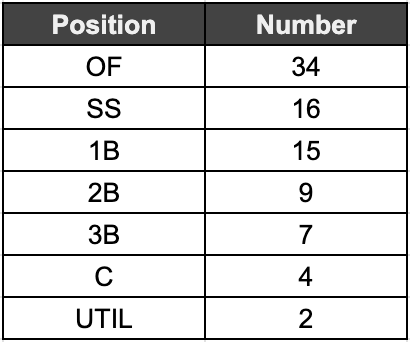
Among the top-75 roto hitters from 2025, only seven qualified at third base. That was fewer than every true position except catcher. Shortstop (16), first base (15), and even second base (9) all outpaced it comfortably, demonstrating just how thin the position was at the high end.
That scarcity shows up again in 2026 when comparing players who qualify at multiple positions. For instance, Miguel Vargas qualifies at both first and third base. In THE BAT X, he projects as the No. 11 third baseman for 2026, but only the No. 18 first baseman. OOPSY has a similar outcome, dropping him from 15th at third to 23rd at first. The player obviously didn’t change, but the depth at the position did.
Ultimately, third base is thin at the top, and the middle hollows out in a hurry. My preferred approach is to land a top-10 player at the position and stay firmly above the tier cliff. For managers with MI or CI spots, it often makes more sense to fill CI with a second first baseman, similar to how shortstop depth naturally fits into MI.
Legendary Third Basemen
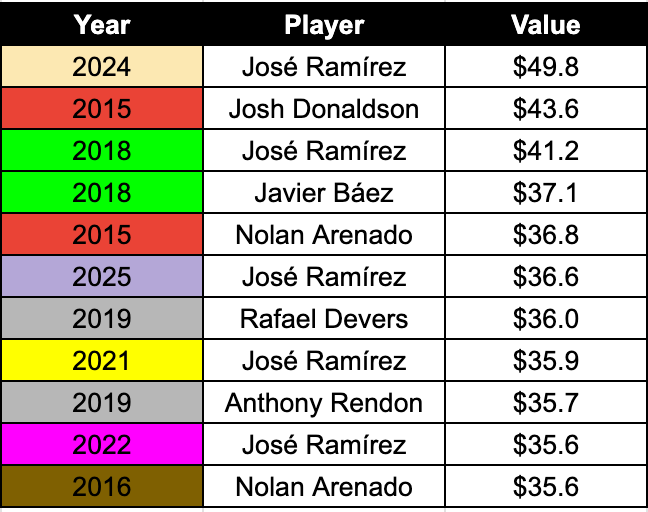
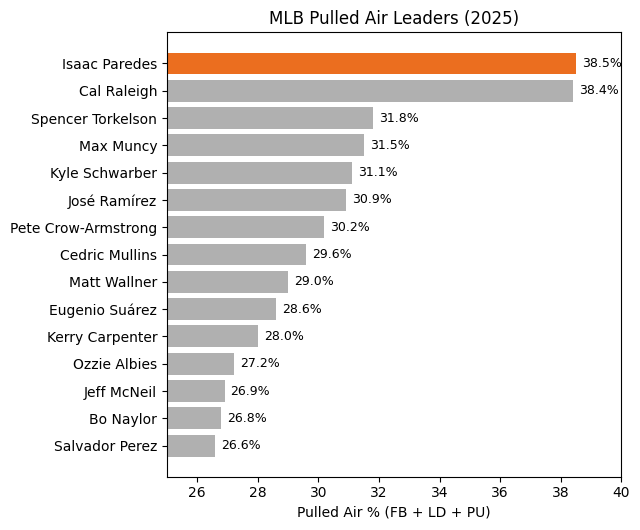
José Ramírez cracked this list for the fourth time in five seasons and for the fifth time overall. When you zoom out and realize this data goes all the way back to 2014, it becomes clear that true ceiling seasons at third base just don’t happen very often.
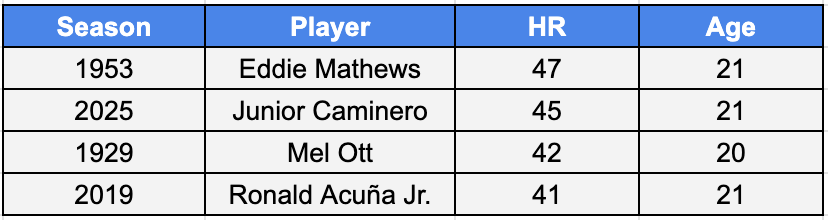
Unlike shortstop or the outfield, there hasn’t been a steady stream of new names pushing their way into this cohort. Junior Caminero is the clearest bet to change that, but even his monster 45-homer season topped out at $30 because he didn’t bring speed with it.
That’s why the gap at this position always feels so uncomfortable. The elite third-base seasons from the past decade-plus have been first-round outcomes, and then there’s a big drop-off to everyone else. Most third basemen don’t live anywhere near that range. It reinforces the same idea this preview keeps circling back to. You don’t need to win third base. You just can’t afford to fall off the cliff. For me, that usually means filling the position earlier and moving on, rather than hoping to stitch something together later.
Tier 1:
José Ramírez / Guardians / Age: 33
J-Ram once again leveraged an elite pulled fly-ball rate to outperform his xSLG and broader batted-ball indicators. The contact foundation hasn’t budged. His K% and whiff% remained elite with no signs of slippage. And the stolen bases are now a core part of the profile. He’s leaned into the new rules, running more than ever and setting a new career-high for the second straight year, topping out at 44 in 2025.
Tier 2:
Junior Caminero / Rays / Age: 22
Caminero’s power output was historic for his age, with 45 homers standing as the second-most ever by a player 21 or younger. The approach is still a work in progress, but the low strikeout rate helped stabilize the profile. The raw tools are undeniable, highlighted by top-two bat speed in the league. The key question now is how the plate skills evolve as he moves through his early-to-mid 20s, because that growth will determine whether this settles into star production or something closer to streak-driven volatility.
Tier 3:
Manny Machado / Padres / Age: 33
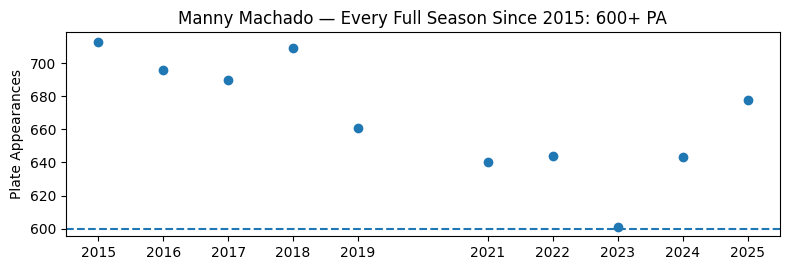
Machado remains one of the safest volume bets in the game, clearing 600 plate appearances in every full season dating back to 2015. The production is almost boring in its reliability. 27–32 homers, around 95 RBI, and roughly 80 runs. What’s easy to miss is that his barrel/PA rate was the second-best of his career, reinforcing his sustained impact.
Jazz Chisholm Jr. / Yankees / Age: 28
Chisholm took a real step forward in 2025, blasting 31 homers (seven more than his previous career high) despite nearly 90 fewer plate appearances. The quality of contact backed it up, with career-best marks in both xwOBA and xSLG, and the running game didn’t regress at all. He stole bases at the same aggressive clip as 2024, another personal high. If everything breaks right, this is legitimate 40/40 upside. The reason the price may stay palatable is durability. 147 and 130 games the past two seasons help, but the longer injury track record still lingers in draft rooms.
Austin Riley / Braves / Age: 29
Riley’s 2021–23 run looks increasingly like the outlier stretch. Three straight upper-$20 seasons before injuries crept in. The past two years tell a different story. Oblique and hand issues in 2024, followed by two abdominal injuries in 2025, and last season the contact skills finally slipped, even if the chase rate held steady. Two straight letdowns are enough to sour the market, which is exactly what makes him interesting again. Entering his age-29 season, this is less about recapturing the peak and more about whether health alone can restore most of the value.
Tier 4:
Maikel Garcia / Royals / Age: 26
Garcia’s game has steadily rounded into form. His pre-existing contact skills, paired with year-over-year gains in bat speed, have helped cut strikeouts, reduce groundballs, and improve barrel/PA. The batting average has bounced around, but the hit tool remains strong, and Kauffman Stadium gives him room to work. Even with a sharp drop in SB efficiency, he ran enough to return value, and the homer gains helped offset the rest. He’s trending up.
Alex Bregman / Cubs / Age: 32
Bregman’s plate discipline rebounded in 2025, with his walk rate bouncing back from a 2024 dip while the rest of the approach stayed intact. He continued to pull the ball in the air at a high-end clip, and the four-category contribution looked much like the familiar version. Solid power, strong OBP, and steady run production. A strained quad cost him some time, but nothing else meaningfully changed.
Matt Chapman / Giants / Age: 33
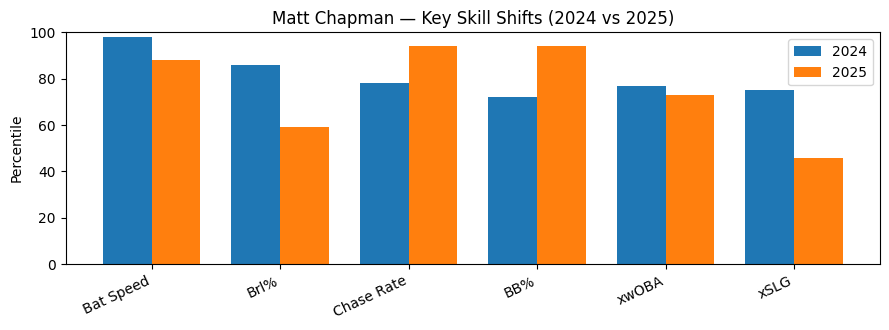
Chapman’s 2024 roto output stands out as a five-year outlier, driven more by circumstance than a true skills jump. The 15 stolen bases came in a contract year, and elevated runs and RBI padded the line despite no underlying metrics moving into new territory. In 2025, some bat speed erosion showed up. He still had an 88th-percentile mark, but it was enough to drag down the barrel/PA rate. On the positive side, his swing decisions showed improvement.
Eugenio Suárez / Free Agent / Age: 34
Two straight $20-plus seasons make it tempting to finally buy in, but this is where timing matters. The Statcast profile is troublesome, the chase rate is trending the wrong way, and there’s no speed to soften the batting average drain. Last year’s value leaned heavily on 118 RBI, an outcome that’s far harder to bank on than the skill set itself. He can still run into barrels, but at 34, this feels like the kind of profile you’re better off fading a year early than chasing a year too late.
Tier 5:
Jordan Westburg / Orioles / Age: 27
Westburg didn’t make the leap many were hoping for, as the plate-skill cracks from 2024 resurfaced and dragged down the batted-ball profile. The encouraging part is that some of the expected metrics still popped, which matters at a thinner third-base position. That keeps a bounce back firmly in play. But without speed or a true standout carrying tool, the ceiling looks somewhat capped.
Tier 6:
Max Muncy / Dodgers / Age: 35
At 34, Muncy put together one of his best skill-based seasons. He led third basemen in xwOBA, ranked second in xSLG, and paired a career-high walk rate with his best strikeout mark since 2021, all while posting a career-best hard-hit rate. The concerns aren’t skill-related. Knee and oblique issues limited him last year, and he remains vulnerable to platoon usage thanks to ongoing struggles against lefties. The power-and-patience profile is real, but it’s not as roto-friendly as the underlying metrics might suggest.
Colson Montgomery / White Sox / Age: 24
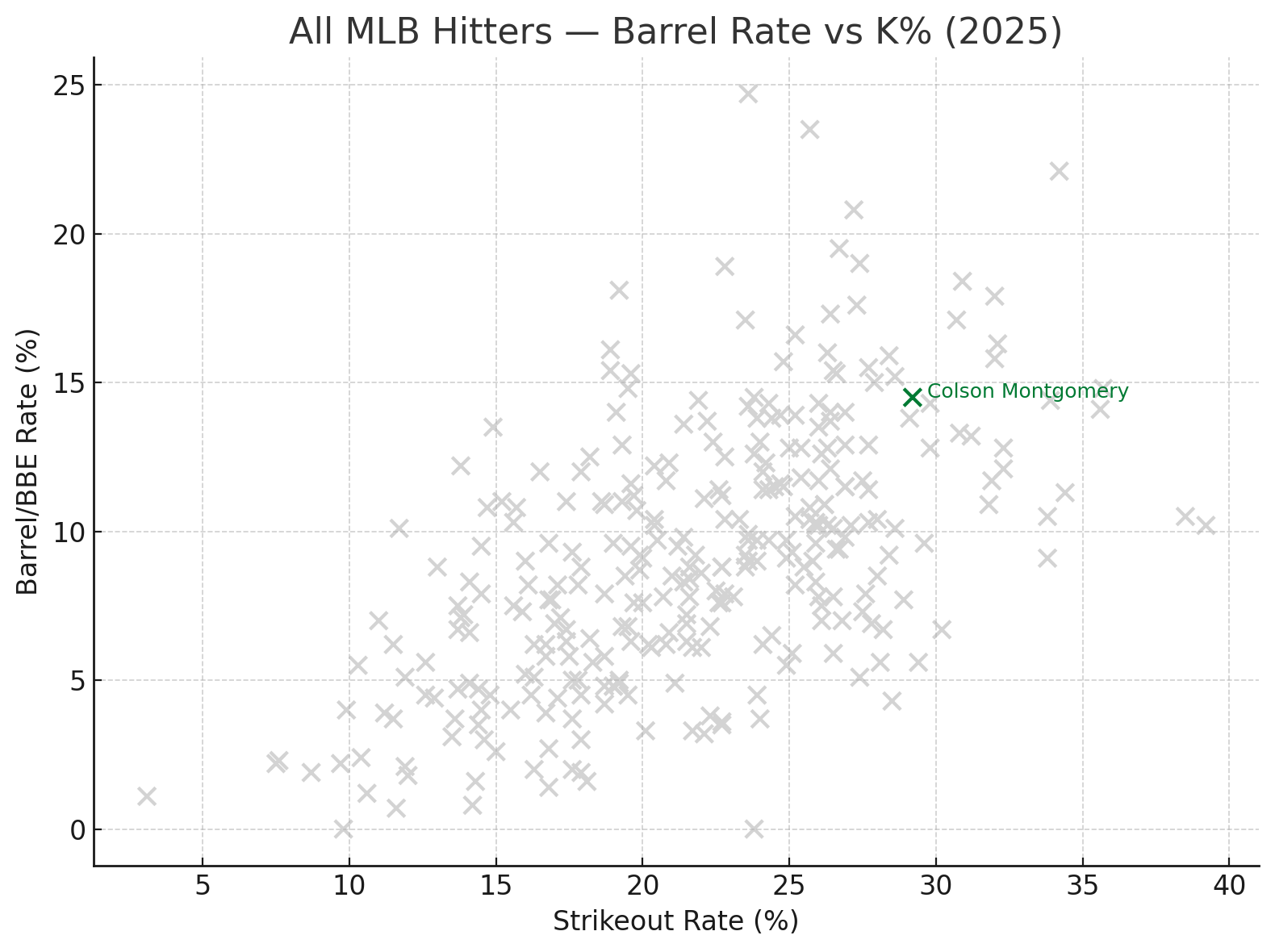
Montgomery flashed upside in his debut, ranking 4th among shortstops in barrel/PA and 3rd in xSLG (min. 150 BBE). He paired that with an elite pulled air rate and a heavy fly ball profile. But the contact skills cratered. After a 2023 breakout as a prospect, he posted a 79 wRC+ and 30% K rate across two full minor league seasons. Then he struck out nearly 30% of the time in the majors while popping 21 homers in just 284 plate appearances. No stolen base attempts, either. It’s all power for now, with a pedigree that’s swung as wildly as his approach.
Noelvi Marte / Reds / Age: 24
Marte flashed stretches of roto usefulness in 2025, but the season-long profile never really held together. Across roughly 360 plate appearances, the underlying metrics were underwhelming, with an especially alarming walk rate that sat in the third percentile. That leaves very little margin for error in batting average or power. Entering his age-24 season, the upside still exists, but it’s now tied to real, measurable growth rather than projection alone.
Royce Lewis / Twins / Age: 27
Lewis finally logged a career-high 403 plate appearances, but they came with a career-worst 85 wRC+. The early-career magic of over performing his expected stats in 2022–23 hasn’t carried over the past two years, even as the pulled fly-ball rate has remained intact. The athleticism is still peeking through, evidenced by 14 stolen-base attempts (after entering 2025 with just seven for his career). The path forward looks narrow. He needs to stay on the field and preserve that explosiveness, in a Byron Buxton-like way, for the upside to resurface.
Tier 7:
Addison Barger / Blue Jays / Age: 26
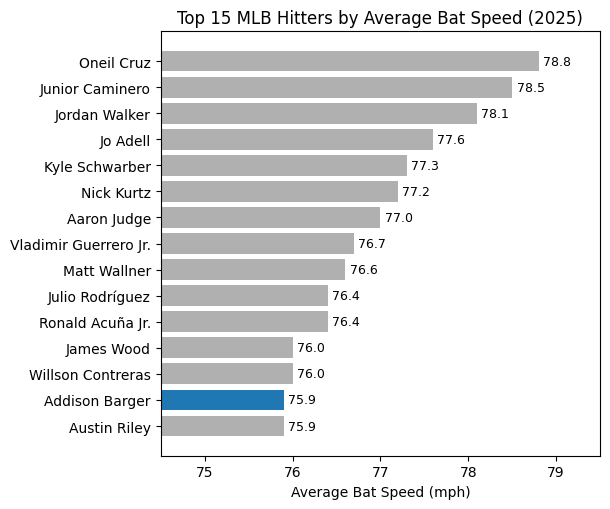
Barger’s power is real. A 93rd-percentile bat speed translated into 21 homers and the fifth-highest xSLG among third basemen, with plenty of hard contact along the way. The plate skills are serviceable but not a separator, which keeps the profile just short of difference-making for now. Still, entering his age-26 season, there’s enough raw strength here that another step forward isn’t hard to imagine.
Alec Bohm / Phillies / Age: 29
Bohm remained a batting-average stabilizer in 2025, but a rib issue and shoulder trouble shaved more than 100 plate appearances off his usual workload and drained the counting stats. The power dipped as the ground-ball rate crept up, though the broader skill set didn’t meaningfully decline. This is still an accumulator profile that is most useful when he’s playing every day. The added 1B eligibility helps if your league meets the 10-game requirement.
Miguel Vargas / White Sox / Age: 26
Vargas finally got an everyday look and led the team in plate appearances, using strong contact and plate skills to settle in as a roughly league-average bat. The limitation are that his bat speed is light and the batted-ball impact doesn’t scare pitchers. Still, there’s some quiet upside if the role holds and the batting average rebounds. He ran a .261 BABIP despite a contact profile that suggests more. The path to value is volume-driven.
Isaac Paredes / Astros / Age: 27
Paredes has been one of the most extreme pulled fly-ball hitters in the league, finishing top-two in the metric in each of the past three seasons. The 2024 stint with the Cubs never quite clicked, but the Crawford Boxes thesis played out exactly as expected in an injury-shortened 2025. There’s no speed here and never will be, but the shape of the production is stable. If healthy, he profiles as a cheap 2.5-category contributor whose value comes from his specific skill set and home park.
Tier 8:
Brett Baty / Mets / Age: 26
Baty sneakily took a step forward in his age-25 season. The raw power showed up more consistently, highlighted by a 115.6 mph max EV that cleared his previous career high by more than two ticks, alongside a spike in barrels per PA. He even chipped in on the bases, going a perfect 8-for-8 as a runner. It wasn’t loud enough to reset expectations, but it was real progress, and the kind that matters heading into the next phase of development.
Carlos Correa / Astros / Age: 31
Correa hasn’t been an ironman, but outside of one season, he’s mostly avoided extended absences since 2020. A full year off shortstop could help keep him upright. He also hit better after returning to Houston, and if the average holds, there’s a path to fantasy relevance, especially with dual eligibility. Just don’t expect any speed as he’s attempted one stolen base since the end of 2019.
Colt Keith / Tigers / Age: 24
Keith’s fantasy usefulness hinges almost entirely on role. He spent much of the final few months hitting leadoff against right-handed pitching, and that’s the version that works: volume-driven runs with a passable batting average. There’s no speed here, so the margin is thin, but the expected stats already took a step forward from 2024 to 2025. If the playing time sticks and the power ticks up even modestly, there’s a path to relevance. Without that lineup spot, though, the profile gets less interesting very fast.
Mark Vientos / Mets / Age: 26
Vientos actually made a meaningful improvement to the strikeout rate, but it was masked by a collapse in BABIP and HR/FB that dragged down the surface line. The Statcast pullback wasn’t nearly as harsh as the box score suggests, which keeps this from being a full skills wipeout. Still, the possibility that 2024 was driven largely by overperformance can’t be dismissed. The most likely outcome lives in the middle: uneven production, with a real chance he runs hot for a stretch at some point next season.
José Caballero / Yankees / Age: 29
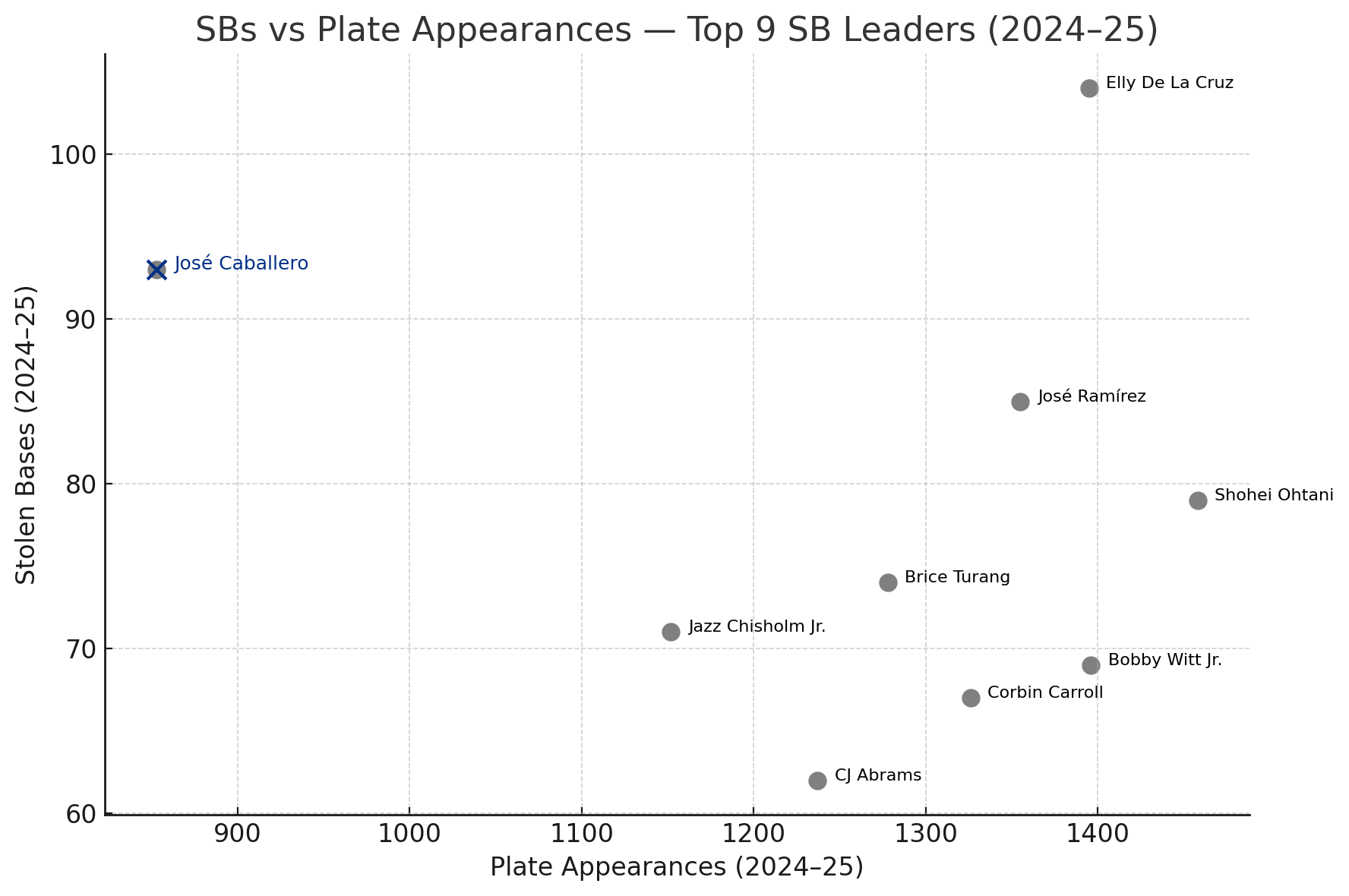
Caballero led MLB with 49 stolen bases in 2025 and has the second-most over the past two seasons, despite far fewer plate appearances than the other league leaders. But the rest of his fantasy profile is thin. The poor batting average makes it harder to absorb the lack of power or counting stats. He does pull the ball in the air and boosted his walk rate last year, but it’s unclear if that’s enough to offset the contact issues. If he opens 2026 as the Yankees’ Volpe fill-in, there’s cheap speed upside if the playing time holds.
Matt Shaw / Cubs / Age: 24
Shaw flashed a style that fantasy managers care about as a rookie. He appeared athletic, aggressive, and capable of contributing across categories when things line up. Long term, he’s in a strong environment for stolen bases in particular, which keeps the profile interesting. The issue is the batted-ball quality wasn’t close to good enough yet, and he’s heading into spring training without a clear everyday role. He’s not a draft-day target, but if an infield injury opens a lane in Chicago, he’s a name worth remembering on the waiver wire.
Great article Tuma!! I too leaned in on Austin Riley last year, and I didn't win the championship to say the least. This article helps tremendously, and I am gunning for Chisholm, I think he produces this year. Thanks Tuma!!